
daily reflection questions
25 Daily Reflection Questions That Do Not Feel Forced
Use 25 daily reflection questions grounded in real moments, energy, relationships, decisions, and needs—without demanding gratitude or a perfect lesson.

In diesem Ratgeber
Wichtigste Punkte
- Questions about one real moment
- Questions about energy and attention
- Questions about relationships
A prompt should feel like a door you might actually open, not a motivational poster asking you to perform wisdom on schedule. The best question is often plain: where did the day change, and what did you notice when it did?
Choose one question that matches the emotional temperature of the day. Answer with a scene before drawing a lesson, skip any prompt that feels manipulative, and let “I do not know yet” remain a complete response.
This guide approaches daily reflection questions as an everyday practice, not a diagnosis, a claim of perfect recall, or a demand for constant self-analysis. It will help you invite an answer that sounds like the person giving it while resisting the pressure to extract inspiration from every difficult day.
In brief for 25 Daily Reflection Questions That Do Not Feel Forced: Begin with one concrete scene, notice before interpreting, save only what will remain useful, and let uncertainty stay visible.
Questions about one real moment
Ask: What moment keeps returning? Where did the day change? What surprised me? What detail would I miss in a month? What felt more important than it looked? These prompts begin with evidence rather than demanding a grand summary.
The aim here is to invite an answer that sounds like the person giving it, not to extract inspiration from every difficult day. A fluorescent hallway and an unexpectedly gentle goodbye may carry the day.
For “questions about one real moment,” hold the first explanation beside the concrete scene: A fluorescent hallway and an unexpectedly gentle goodbye may carry the day.
Try it in a real situation: Pick one and answer with a place, action, and exact detail. For a different angle on daily reflection questions, read What Should You Include in a Daily Reflection?.
If “Pick one and answer with a place, action, and exact detail.” feels too large, reduce it until it can happen in two minutes. A practice that survives an ordinary day is more useful than one that only works under ideal conditions; the purpose is to invite an answer that sounds like the person giving it.
Questions about energy and attention
Ask: When did I feel most awake? What drained me quietly? What did I keep avoiding? Where did my attention feel spacious? What did my body notice first? Energy questions can reveal conditions without turning them into fixed traits.
The aim here is to invite an answer that sounds like the person giving it, not to extract inspiration from every difficult day. Focus may have appeared during a hard task and disappeared during an easy but ambiguous one.
Focus may have appeared during a hard task and disappeared during an easy but ambiguous one. The value of questions about energy and attention is the extra precision it creates, not a conclusion that sounds impressive.
Try it in a real situation: Compare two moments instead of rating the whole day. Within 25 daily reflection questions that do not feel forced, the next practical layer is 30 Weekly Reflection Questions to Understand Your Week.
Treat “Compare two moments instead of rating the whole day.” as a one-day experiment. Compare the result with what you expected, then revise the method rather than judging yourself; the intended outcome is simply to invite an answer that sounds like the person giving it.
Questions about relationships
Ask: Who made room for me? Where did I make an assumption? What conversation needs another sentence? When did I feel close or distant? Whose privacy should I protect? Relationship reflection benefits from specificity and humility.
The aim here is to invite an answer that sounds like the person giving it, not to extract inspiration from every difficult day. A delayed reply is observable; the story that someone no longer cares is not yet established.
Return once more to the ordinary detail: A delayed reply is observable; the story that someone no longer cares is not yet established. If a different fact would change the meaning, write that fact down too; uncertainty belongs inside questions about relationships, not outside it.
Try it in a real situation: Describe your part without claiming access to another person’s motives. [self reflection] explores the same question from a different side](/solutions/self-reflection).
Before you act on “Describe your part without claiming access to another person’s motives.,” decide what information is necessary and what is private. The smallest honest version is usually enough to invite an answer that sounds like the person giving it.
Questions about choices and boundaries
Ask: What did I say yes to? What deserved a no? Which decision felt lighter afterward? What am I postponing? What tradeoff did I accept? Choices make values visible in ordinary behavior.
The aim here is to invite an answer that sounds like the person giving it, not to extract inspiration from every difficult day. Leaving a gathering early may cost time together while protecting the rest needed for tomorrow.
Notice how little drama the example requires: Leaving a gathering early may cost time together while protecting the rest needed for tomorrow. That restraint is useful. It allows questions about choices and boundaries to remain connected to evidence instead of becoming a story that grows more certain with every retelling.
Try it in a real situation: Name the cost and benefit of one decision. Before applying 25 daily reflection questions that do not feel forced to sensitive material, review Gemora’s privacy information and keep another person’s details out of the record.
Complete “Name the cost and benefit of one decision.” in language you would naturally use with someone you trust. If the wording feels staged, simplify it until it supports the real aim: to invite an answer that sounds like the person giving it.
Questions for tomorrow without fixing today
Ask: What needs gentleness? What can stay unfinished? What is the smallest useful next step? What question should I carry? What do I want to remember when morning arrives? A close should reduce confusion, not manufacture certainty.
The aim here is to invite an answer that sounds like the person giving it, not to extract inspiration from every difficult day. Tomorrow may need a clarifying email, not a complete reinvention of work.
Imagine reviewing this scene a month later: Tomorrow may need a clarifying email, not a complete reinvention of work. Preserve the detail that would help you understand questions for tomorrow without fixing today, and leave out anything that merely makes the record longer.
Try it in a real situation: Choose one future-facing sentence and stop. A useful companion to 25 daily reflection questions that do not feel forced is What Should You Include in a Daily Reflection?.
After trying “Choose one future-facing sentence and stop.,” name what became clearer and what stayed unresolved. That distinction keeps the exercise oriented toward the modest goal to invite an answer that sounds like the person giving it.
What the evidence supports—and where it stops
“How many reflection questions should I answer each day?” sounds simple, while “Can I reuse the same question?” exposes the missing context. The references below are used to keep daily reflection questions useful without presenting a general guide as an assessment of one person.
The guide also relies on Emotional and physical health benefits of expressive writing when discussing findings from studied expressive-writing settings; those findings do not mean writing suits every person or replaces professional care. That distinction matters for 25 daily reflection questions that do not feel forced, because a plausible explanation can still become misleading when it is presented without the limits of its evidence.
Event boundaries in perception affect memory encoding and updating informs the background for 25 daily reflection questions that do not feel forced, specifically how event boundaries can organize remembered experience; it does not show that any single reflection ritual guarantees stronger memory. It cannot own the reader’s private interpretation of daily reflection questions; the unresolved boundary remains visible in “What if a question makes me feel judged?”
A second kind of check comes from Gemora Privacy Policy: Gemora’s first-party description of data and memory handling; it should be read as product policy rather than independent evidence of outcomes. For 25 daily reflection questions that do not feel forced, use the reference to test certainty and revisit “Can I reuse the same question?” without forcing an ordinary experience into a clinical or technical frame.
The appropriate takeaway remains smaller than a promise. Yes. Repeating a strong question can reveal change across time, provided you still answer from a specific day. Keep the original scene available, distinguish first-party product documentation from independent research, and seek qualified help when the issue moves beyond ordinary reflection or organization.
A small practice to try today
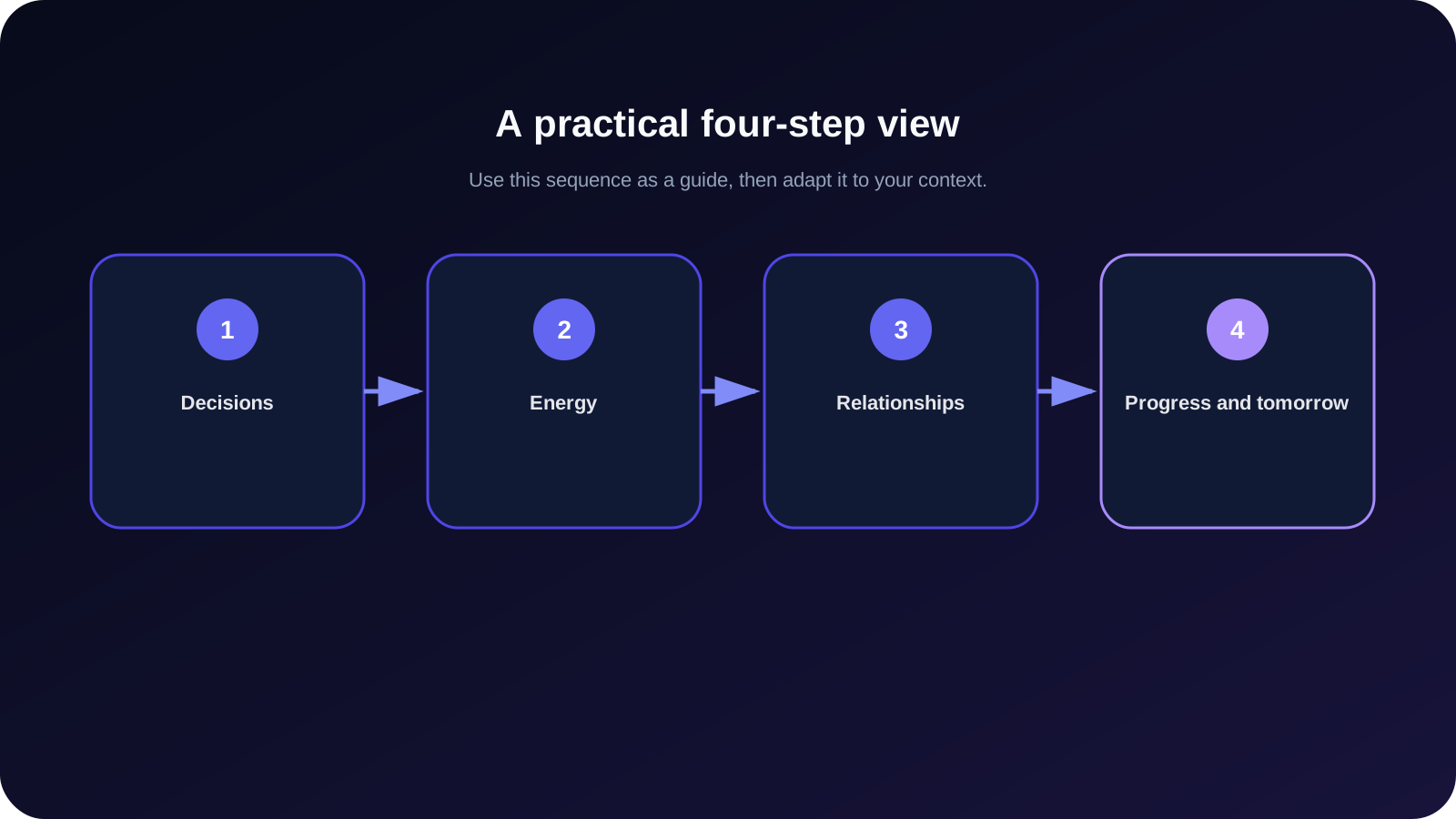
Return to the image at the beginning of this guide: a prompt should feel like a door you might actually open, not a motivational poster asking you to perform wisdom on schedule. The exercise below moves from “Scan the five categories.” to “Stop before the reflection becomes a performance..” That arc is intentionally small. It is designed to invite an answer that sounds like the person giving it without asking you to extract inspiration from every difficult day.
- Scan the five categories.
- Choose the question that creates recognition, not guilt.
- Answer with one concrete scene.
- Add one sentence that complicates the first answer.
- Stop before the reflection becomes a performance.
Do not score the finished exercise. Instead, compare its final line with “Scan the five categories..” For daily reflection questions, the useful change is greater specificity: enough context to invite an answer that sounds like the person giving it, with no need to extract inspiration from every difficult day. Delete what is decorative, invasive, or unsupported.
Carry forward only what supports the aim to invite an answer that sounds like the person giving it. The connected Gemora path is available when continuity has a clear purpose; otherwise, let this exercise end after “Stop before the reflection becomes a performance.” and resist the urge to extract inspiration from every difficult day.
Den Gedanken weiterführen
Choose one question that feels honest
Verbinden Sie Gespräche, nützlichen Kontext, Überlegungen, Projekte und Aufgaben in einem persönlichen Arbeitsbereich.
Kostenlos startenHäufig gestellte Fragen
How many reflection questions should I answer each day?
Usually one is enough. Add a follow-up only when it deepens the same issue rather than opening an unrelated one.
What if a question makes me feel judged?
Skip it or rewrite it in neutral language. A useful prompt supports honesty rather than forcing a preferred emotion.
Can I reuse the same question?
Yes. Repeating a strong question can reveal change across time, provided you still answer from a specific day.

