
how to create a personal timeline
How to Create a Personal Timeline of Your Life
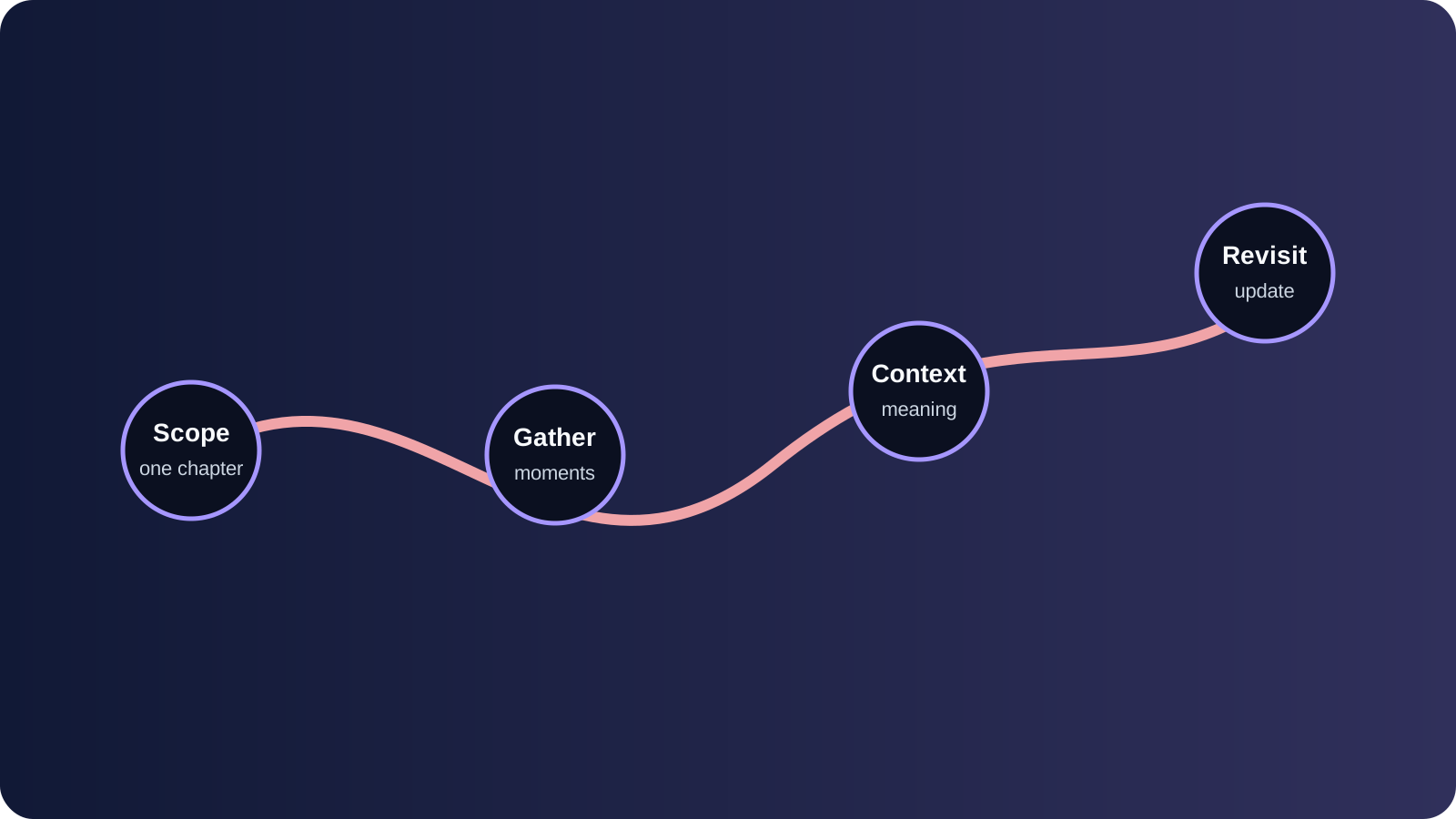
Build a personal life timeline by choosing a chapter, gathering meaningful moments, adding context, handling uncertainty, and revisiting what changed.

在本指南中
要点
- Choose the question before collecting milestones
- Gather four kinds of moments
- Add context without turning hindsight into fact
A personal life timeline is more useful when it records how events connected, not just when they happened. A move can change a friendship; a small conversation can alter a career decision; an ordinary week can contain the first clue that a season of life is ending.
This guide shows how to build a timeline that combines events, decisions, conversations, and small memories. You can make it in a notebook, spreadsheet, dedicated journal, or a memory workspace. The method is intentionally forgiving when dates are incomplete.
Choose the question before collecting milestones
“My whole life” is too broad for a first session. Choose a question such as “How did I arrive at my current work?” or “What changed in my sense of home after 2020?” A question gives the timeline a boundary and helps you decide which details belong.
Set a time window that you can review in one sitting: one year, a relationship, a move, a project, or a transition. You can create a second timeline later. The monthly life review is useful for keeping a living timeline current without rebuilding it from scratch.
Gather four kinds of moments
Collect more than official milestones. A balanced timeline includes events, decisions, conversations, and small memories. Events are what happened. Decisions are the choices you made or postponed. Conversations show how relationships and information changed. Small memories add texture: a room, a phrase, a song, or a repeated routine.
Use calendars, photos, messages, travel records, old notes, and receipts as prompts, not as the entire story. Evidence can anchor a date while your reflection explains why the moment mattered.
| Layer | Prompt | Example |
|---|---|---|
| Event | What changed in the outside world? | Moved to a new apartment in spring. |
| Decision | What did I choose, avoid, or test? | Accepted a role with less travel. |
| Conversation | Which exchange changed my understanding? | A friend asked what I actually wanted. |
| Small memory | What detail still carries the feeling? | Eating noodles on the floor before furniture arrived. |
Add context without turning hindsight into fact
For each moment, write three short lines: what I knew then, what I felt then, and what I understand now. Keeping these lines separate prevents the present-day interpretation from masquerading as the original truth.
When a date is uncertain, say so. Use “early summer,” “around 2018,” or “before the move.” If two memories conflict, keep both versions and add a note about the uncertainty. An honest approximate timeline is more valuable than a precise-looking fiction.
Identify turning points and quiet continuities
After collecting entries, look for changes in direction: a new constraint, a repeated choice, an ending, or a conversation that opened a possibility. Mark a turning point only when you can explain the before-and-after difference. Also mark continuities—habits, people, values, or places that remained present. A life is shaped by what persists as much as by dramatic change.
Avoid forcing a neat narrative. Some events will remain unresolved. Use a question mark or a “still learning” label instead of assigning a lesson you do not believe.
A copyable timeline worksheet
Copy one row for every moment you want to keep:
Approximate date:
Moment (one concrete sentence):
Layer: event / decision / conversation / small memory
What I knew then:
What I felt then:
What I understand now:
People or places involved:
Evidence or source:
Open question:
Start with five rows. A short timeline you revisit will outlast a giant list you never open. Link each row to a photo, note, or journal entry when that helps you verify the context.
You can make the first pass in chronological order, but a question-led pass often reveals more. After listing the rows, sort them into “before,” “during,” and “after” the transition you are exploring. Note which expectations survived and which changed. This creates context without claiming that one event caused everything that followed.
Add a confidence marker to every date: exact, month-level, season-level, or remembered order only. Confidence is not a judgment about whether the memory is real; it is a reminder about how precisely you can place it. When a new source changes the date, update the marker and keep a brief revision note. Future you should be able to tell what changed and why.
Small memories are especially useful when they connect two formal milestones. A particular lunch may explain why a decision finally became possible. A repeated bus route may show that a new routine was already forming before you named it. Keep these details short and concrete. Their value is in the connection they reveal, not in making the timeline literary.
When several people appear in a moment, write from your own perspective and avoid turning assumptions into their inner thoughts. “I remember feeling dismissed” is safer and more accurate than “they wanted me to fail.” You can preserve the emotional truth while leaving room for another person’s account to differ.
For a digital timeline, use stable labels such as work, home, relationship, health, or creative. Labels make later review possible without reducing a memory to a category. If you keep the timeline in Gemora, connect only the entries that support the question you chose; a complete memory dump is harder to review and harder to protect.
At the end of a session, write a provisional sentence: “This period seems to be about…” Add a date to that sentence. It is a hypothesis, not a verdict. Revisit it after a month or after a new conversation, and let the timeline become more accurate rather than more dramatic.
Try a second pass using “because” and “therefore” sparingly. “I moved because the lease ended” records a concrete relationship. “I moved therefore I became independent” is an interpretation that may deserve evidence. Keep both if they are useful, but label the second as your current reading. This distinction helps when a later memory complicates the story.
If the timeline is shared with a partner or family member, agree on ownership before you begin. One person may remember an event differently, and neither version has to erase the other. Store private reflections separately from the shared facts. The goal is understanding, not a negotiated official history.
Review the timeline when a new decision resembles an old one. Read the earlier context before borrowing its lesson. Similar circumstances can produce different choices when your resources, relationships, or values have changed. A timeline should widen your options, not trap you inside a pattern.
For a practical companion to this process, use a monthly review to add only the moments that still matter after a few weeks. Time is a useful filter: not every busy day deserves a permanent place.
If you need a low-pressure entry point between timeline sessions, use daily reflection prompts and save only the moments that answer your chosen question.
Example: a complete small timeline
March 2023 — Event: moved into a smaller apartment after a lease ended.
What I knew then: I wanted lower costs and less commuting.
What I felt then: relief mixed with embarrassment about the change.

May 2023 — Conversation: a friend asked what I wanted my evenings to hold.
What I knew then: I was filling the new space with work equipment.
What I understand now: the question exposed how little room I had left for people.

September 2023 — Decision: protected one evening each week for cooking and visits.
Confidence: exact month, based on calendar entries.
Open question: which relationships became easier when the routine changed?
Notice what this example does not do. It does not claim the move caused every later change, and it does not turn the friend’s question into a universal lesson. It keeps evidence, feeling, and current meaning in separate lines so the timeline can be revised without losing its honesty.
When your first version is complete, read it aloud once. Awkward wording often reveals a hidden assumption or a date you are treating as more certain than it is. Edit for accuracy, not drama. A timeline earns trust by making room for what you still do not know.
Keep a “later” list for memories that do not fit the first question. This prevents scope creep while preserving a useful lead for the next timeline. You might discover that the unanswered question is not about work at all but about belonging, recovery, or friendship. A second timeline can then begin with a better question and less noise.
Keep the timeline alive
Choose a monthly or quarterly review date. Add new moments, correct dates, and mark memories you no longer want to retain. Then ask one gentle question: “What is becoming clearer?” The answer may be a pattern, a boundary, or simply the fact that a season still needs time.
Gemora users can connect the timeline to Memory, Calendar, and journal entries so a review is grounded in more than a single retrospective session. Keep privacy boundaries explicit: not every conversation belongs in a permanent life record.
Frequently asked questions
What if I remember very little? Start with external anchors such as calendars, photos, or locations, then write the feeling and meaning that return. Missing periods are normal; do not invent detail to make the line smooth.
Should a timeline include painful events? Only if doing so feels safe and useful. You can use broad labels, private notes, or a separate protected record. A timeline is a tool, not a requirement to revisit trauma.
How long should it be? Begin with five to fifteen entries. The best length is the smallest one that answers your original question and leaves room for future revision.
The list can stay private. Its purpose is to protect attention, not to create another obligation to complete.
The timeline is allowed to remain unfinished. Its value comes from returning to the right moments with better questions, not from filling every blank.
Leave a little room for the next version.
The next version may include a date you recover, a conversation you understand differently, or a memory you decide not to preserve. All three are legitimate changes. Revision is part of remembering well.
继续思考
Turn scattered moments into a living timeline
在一个个人工作空间中连接对话、有用的上下文、反思、项目和任务。
免费开始常见问题
What should go on a personal timeline?
Include moments that changed a direction, relationship, place, belief, project, or sense of self. Small details can matter when they explain why a later choice made sense.
What if I do not remember exact dates?
Use an approximate month, season, age, or sequence and label the uncertainty. A truthful range is more useful than invented precision.
How often should I update a life timeline?
Revisit after a meaningful transition or during a monthly or quarterly review. It should remain a living reference, not another daily tracking obligation.

