alternatives to journaling
Alternatives to Journaling for People Who Hate Writing
Explore practical alternatives to journaling, including voice notes, photo captions, walking reflection, conversation, timelines, and memory anchors.

In this guide
The notebook is beautiful. The paper is thick. It has also remained empty for eleven months. Around it, life has been recorded in other ways: a voice message never sent, four photographs from a hard week, a route walked until a decision became clear.
If you hate writing, use a reflective medium that matches how your mind already moves. Speak, walk, arrange images, make a timeline, talk with someone, or save a single memory anchor. The purpose is not to produce pages; it is to notice and revisit what matters.
This guide approaches alternatives to journaling as an everyday practice, not a diagnosis, a claim of perfect recall, or a demand for constant self-analysis. It will help you make reflection compatible with real habits while resisting the pressure to force one culturally familiar format on every mind.
In brief for Alternatives to Journaling for People Who Hate Writing: Begin with one concrete scene, notice before interpreting, save only what will remain useful, and let uncertainty stay visible.
Voice notes for people who think aloud
Speaking is fast enough to catch emotion before it is edited into a respectable paragraph. Tone, pauses, and repetition can reveal emphasis, while a short transcript makes later review possible.
The aim here is to make reflection compatible with real habits, not to force one culturally familiar format on every mind. A walk home becomes a spoken note about the relief hidden underneath anger.
For “voice notes for people who think aloud,” hold the first explanation beside the concrete scene: A walk home becomes a spoken note about the relief hidden underneath anger.
Try it in a real situation: Record two minutes with a clear opening question and a hard stop. For a different angle on alternatives to journaling, read How to Reflect on Your Day When You Hate Journaling.
After trying “Record two minutes with a clear opening question and a hard stop.,” name what became clearer and what stayed unresolved. That distinction keeps the exercise oriented toward the modest goal to make reflection compatible with real habits.
Photo captions for visual recall
A photograph can hold color and setting, while one sentence restores the personal context the image cannot show. This works best when you choose a few images rather than treating the entire camera roll as a journal.
The aim here is to make reflection compatible with real habits, not to force one culturally familiar format on every mind. The empty chair matters because it was the first dinner after a roommate moved away.
The empty chair matters because it was the first dinner after a roommate moved away. The value of photo captions for visual recall is the extra precision it creates, not a conclusion that sounds impressive.
Try it in a real situation: Caption one photo with what happened just before or after the frame. Within alternatives to journaling for people who hate writing, the next practical layer is Voice Journaling vs Written Journaling.
If “Caption one photo with what happened just before or after the frame.” feels too large, reduce it until it can happen in two minutes. A practice that survives an ordinary day is more useful than one that only works under ideal conditions; the purpose is to make reflection compatible with real habits.
Walking reflection for restless attention
Movement can make reflection feel less confrontational than sitting still under a lamp with a blank page. A familiar route reduces navigation demands and lets a question unfold without constant input.
The aim here is to make reflection compatible with real habits, not to force one culturally familiar format on every mind. At the third block, the question “What am I avoiding?” becomes more precise: one email, one apology, one deadline.
Return once more to the ordinary detail: At the third block, the question “What am I avoiding?” becomes more precise: one email, one apology, one deadline. If a different fact would change the meaning, write that fact down too; uncertainty belongs inside walking reflection for restless attention, not outside it.
Try it in a real situation: Walk without audio for ten minutes and carry one question only. [ai journaling] explores the same question from a different side](/solutions/ai-journaling).
Treat “Walk without audio for ten minutes and carry one question only.” as a one-day experiment. Compare the result with what you expected, then revise the method rather than judging yourself; the intended outcome is simply to make reflection compatible with real habits.
Conversation for thoughts that need response
Another voice can ask for detail, challenge a sweeping conclusion, or simply witness a difficult truth. Choose a person or tool that respects boundaries and does not rush toward advice.
The aim here is to make reflection compatible with real habits, not to force one culturally familiar format on every mind. A friend asks “When did the day change?” and helps locate the moment the tension began.
Notice how little drama the example requires: A friend asks “When did the day change?” and helps locate the moment the tension began. That restraint is useful. It allows conversation for thoughts that need response to remain connected to evidence instead of becoming a story that grows more certain with every retelling.
Try it in a real situation: Begin by saying whether you want listening, questions, or options. Before applying alternatives to journaling for people who hate writing to sensitive material, review Gemora’s privacy information and keep another person’s details out of the record.
Before you act on “Begin by saying whether you want listening, questions, or options.,” decide what information is necessary and what is private. The smallest honest version is usually enough to make reflection compatible with real habits.
Timelines and maps for nonlinear thinkers
Some experiences make more sense as sequence, space, or relationship rather than prose. A simple timeline separates what occurred from what you later inferred.
The aim here is to make reflection compatible with real habits, not to force one culturally familiar format on every mind. A project conflict looks different when the missed handoff appears before the sharp conversation.
Imagine reviewing this scene a month later: A project conflict looks different when the missed handoff appears before the sharp conversation. Preserve the detail that would help you understand timelines and maps for nonlinear thinkers, and leave out anything that merely makes the record longer.
Try it in a real situation: Place five events on a line; add emotion above and unanswered questions below. A useful companion to alternatives to journaling for people who hate writing is How to Reflect on Your Day When You Hate Journaling.
Complete “Place five events on a line; add emotion above and unanswered questions below.” in language you would naturally use with someone you trust. If the wording feels staged, simplify it until it supports the real aim: to make reflection compatible with real habits.
Evidence, limits, and the questions this guide cannot answer
The practical questions “What is the easiest alternative to journaling?” and “Does talking to an AI count as journaling?” need more than a confident tone. They need boundaries around what research, product documentation, and personal reflection can each establish.
For Alternatives to Journaling for People Who Hate Writing, Emotional and physical health benefits of expressive writing provides a careful reference point for findings from studied expressive-writing settings; those findings do not mean writing suits every person or replaces professional care. For alternatives to journaling, proportionality means returning to the FAQ question “What is the easiest alternative to journaling?” rather than stretching the source into a promise it never made.
The guide also relies on Event perception and memory: a review when discussing the relationship between event perception, memory, and routine; it cannot determine why one individual week felt vivid or blurred. That distinction matters for alternatives to journaling for people who hate writing, because a plausible explanation can still become misleading when it is presented without the limits of its evidence.
Gemora Privacy Policy informs the background for alternatives to journaling for people who hate writing, specifically Gemora’s first-party description of data and memory handling; it should be read as product policy rather than independent evidence of outcomes. It cannot own the reader’s private interpretation of alternatives to journaling; the unresolved boundary remains visible in “Does talking to an AI count as journaling?”
Together, these sources support a restrained conclusion: Explore practical alternatives to journaling, including voice notes, photo captions, walking reflection, conversation, timelines, and memory anchors. They do not decide which detail you should save, what another person meant, or whether a concern requires professional attention. Use the exercise as a test, and let new evidence revise the answer.
A small practice to try today
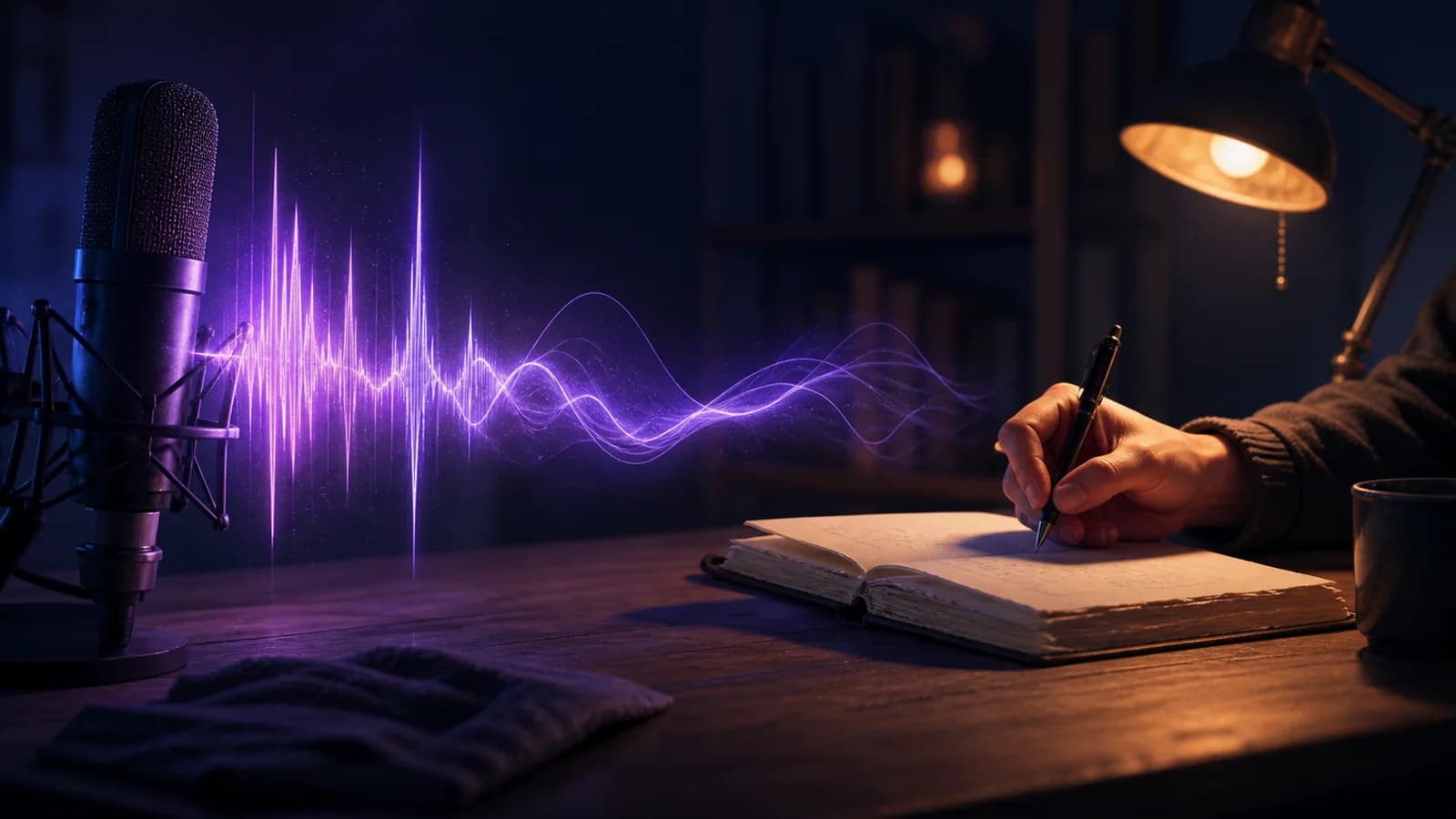
Return to the image at the beginning of this guide: the notebook is beautiful. The exercise below moves from “Pick the medium with the least resistance.” to “Review after a week and keep only what remains useful..” That arc is intentionally small. It is designed to make reflection compatible with real habits without asking you to force one culturally familiar format on every mind.
- Pick the medium with the least resistance.
- Set a five-minute limit.
- Capture one situation, not your entire life.
- Add one question or next step.
- Review after a week and keep only what remains useful.
Read the result once through the lens of alternatives to journaling and ask whether it helped you make reflection compatible with real habits. Return to step three—“Capture one situation, not your entire life.”—because that is where the observation should become testable. Remove borrowed private details, and soften any sentence that begins to force one culturally familiar format on every mind.
The final instruction—“Review after a week and keep only what remains useful.”—decides whether anything should travel beyond this moment. Gemora’s related workflow can connect a chosen piece of context, but leaving the reflection unsaved is equally valid when permanence would not help you make reflection compatible with real habits.

Continue the thread
Find a reflection format that feels natural
Connect conversations, useful context, reflections, projects, and tasks in one personal workspace.
Start freeFrequently asked questions
What is the easiest alternative to journaling?
For many people, a sixty-second voice note or a one-sentence photo caption has the lowest friction. Choose what fits your natural mode of recall.
Does talking to an AI count as journaling?
It can function as conversational journaling when the exchange supports reflection and you retain control over what is saved.
Do I need to keep my reflections?
No. Reflection can be valuable in the moment. Save only material you want to revisit and are comfortable storing.
Sources and further reading
Written by Khai Tran and reviewed under the Gemora Editorial Policy.